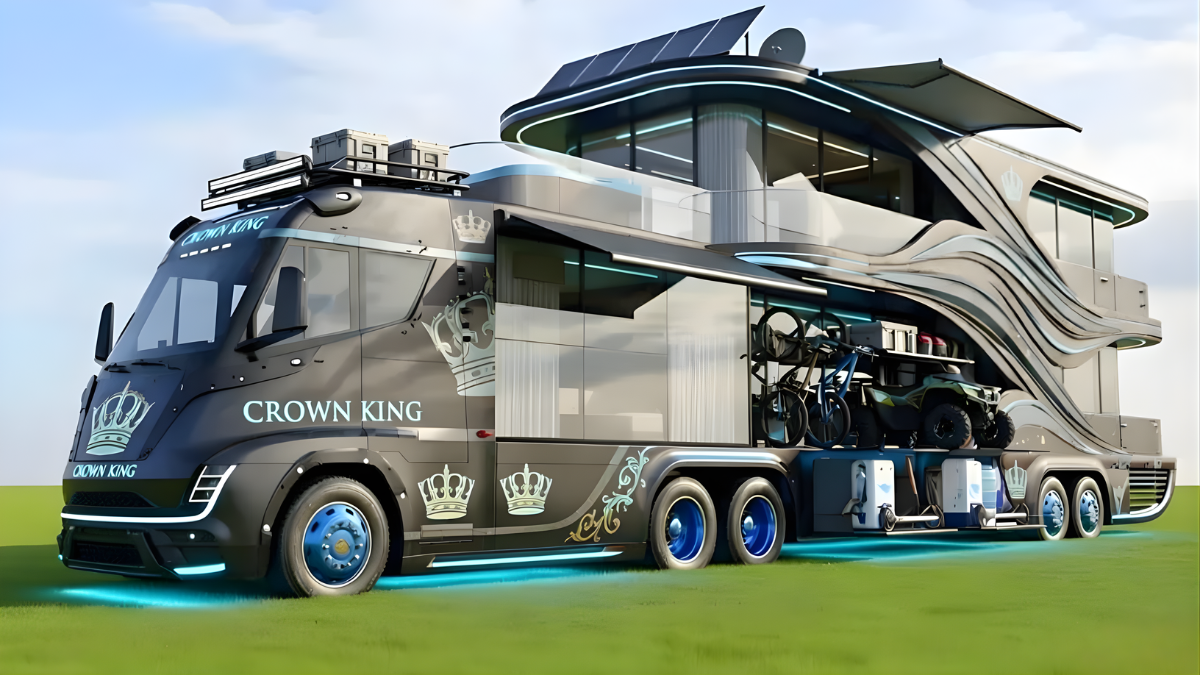
The 2026 Tesla Motorhome is quickly becoming one of the most talked-about concepts in the recreational vehicle world. While traditional RVs continue to rely on diesel engines and fuel-heavy designs, this electric motorhome vision introduces a completely different philosophy built around silence, sustainability, and intelligent technology. Designed to merge Tesla’s electric vehicle expertise with long-distance travel comfort, the concept promises a cleaner, quieter, and far more connected way to experience life on the road.
As travelers increasingly prioritize eco-friendly solutions, off-grid capability, and smart living, the Tesla Motorhome positions itself as a symbol of what premium RV travel could look like in the near future.
A Radical Shift From Fuel to Fully Electric Travel
The most defining element of the 2026 Tesla Motorhome is its fully electric drivetrain. Instead of a loud diesel engine, the motorhome relies on high-capacity battery systems and electric motors that deliver instant torque with almost no noise. This silent operation fundamentally changes the RV experience, especially on long highway drives and overnight stays.
Electric propulsion allows smoother acceleration, less vibration, and reduced driver fatigue. For a large vehicle like a motorhome, this translates into a calmer driving experience and a more relaxing cabin environment. The absence of engine noise also enhances comfort when parked, allowing travelers to enjoy natural surroundings without constant mechanical sound.
Built on the innovation philosophy of Tesla, the motorhome reflects a push toward eliminating fossil fuels from recreational travel altogether.
Design Focused on Efficiency and Aerodynamics
Unlike conventional box-shaped RVs, the Tesla Motorhome concept emphasizes aerodynamic efficiency. The exterior design is imagined with smooth lines, curved edges, and a streamlined profile that reduces drag and helps preserve battery range. This design approach is critical for electric vehicles, where efficiency directly impacts usability.

Integrated solar panels across the roof surface further support energy management by generating supplemental power during daylight hours. While solar alone cannot replace charging, it helps extend off-grid stays and reduces dependence on external power sources.
The futuristic exterior also supports advanced sensor placement, preparing the vehicle for autonomous and semi-autonomous driving capabilities.
Range and Smart Energy Management
Range anxiety remains one of the biggest concerns for electric vehicle adoption, especially in large platforms like RVs. The 2026 Tesla Motorhome concept addresses this with high-capacity battery packs combined with intelligent energy optimization.
Regenerative braking helps recover energy during deceleration, while software-driven systems manage power distribution across propulsion, climate control, and onboard appliances. This ensures that energy is used efficiently without sacrificing comfort.
Access to Tesla’s fast-charging ecosystem further strengthens the concept’s practicality. Strategic charging during rest breaks allows long-distance travel to remain feasible, especially as charging infrastructure continues to expand globally.
Interior Designed Like a Smart Home on Wheels
Inside, the Tesla Motorhome breaks away from traditional RV interiors. The cabin is envisioned as a smart living space rather than a vehicle interior. Large central touchscreens replace physical switches, allowing control of navigation, lighting, climate, energy usage, and entertainment from a single interface.

Voice commands and over-the-air software updates ensure that the system evolves over time, improving usability long after purchase. This software-first approach means the motorhome could gain new features and optimizations without physical upgrades.
The layout focuses on modular design, with seating areas that convert into sleeping spaces, hidden storage solutions, and flexible zones that adapt to travel, work, or relaxation.
Comfort and Atmosphere for Long-Distance Living
Comfort plays a central role in the Tesla Motorhome concept. Large panoramic windows invite natural light into the cabin, creating a sense of openness that reduces the boxed-in feeling common in RVs. Advanced climate control systems maintain consistent temperatures quietly and efficiently, even during extreme weather.
Minimalist interior design reduces visual clutter, helping occupants feel relaxed rather than overwhelmed. Materials are expected to focus on durability, sustainability, and easy maintenance, aligning with Tesla’s clean design language.
The goal is not luxury through excess, but luxury through simplicity and intelligent design.
Off-Grid Freedom Through Solar and Battery Storage
One of the most appealing promises of the 2026 Tesla Motorhome is true off-grid capability. Solar panels work in combination with onboard battery storage to power lighting, climate systems, refrigeration, and electronics when parked far from charging stations.

This setup allows travelers to camp in remote locations without generators or fuel dependency. Silent energy production enhances the experience, especially in nature-focused environments where noise pollution is a major drawback of traditional RVs.
For digital nomads and long-term travelers, this level of energy independence represents a major shift in how RV life is experienced.
Advanced Safety and Driver Assistance
Safety technology is another cornerstone of the Tesla Motorhome concept. Advanced driver assistance systems are expected to include adaptive cruise control, lane centering, collision avoidance, and extensive camera coverage to reduce blind spots.
Semi-autonomous highway driving capabilities help reduce fatigue during long journeys, making extended trips safer and more comfortable. These systems work together to assist rather than replace the driver, offering confidence without compromising control.
The emphasis is on predictive safety that actively works to prevent incidents rather than simply reacting to them.
Connectivity and App-Based Control
Connectivity extends beyond the cabin screens. Mobile app integration allows owners to monitor battery levels, control climate settings, and check vehicle status remotely. This is particularly useful when parked off-grid or preparing the motorhome before a journey.

Real-time updates, route planning, and charging optimization further enhance convenience, making trip planning more efficient and less stressful.
Who the Tesla Motorhome Is Meant For
The 2026 Tesla Motorhome concept is designed for forward-thinking travelers who value sustainability, technology, and quiet comfort. It appeals to eco-conscious adventurers, digital nomads, and premium travelers who want a cleaner alternative to traditional RVs.
It may not be suited for buyers who prioritize low upfront cost or simple mechanical systems, but for those embracing the future of electric mobility, it represents a powerful vision.
Conclusion
The 2026 Tesla Motorhome offers a compelling glimpse into the future of recreational travel. By combining silent electric power, smart energy management, advanced safety systems, and a connected living environment, it challenges long-standing assumptions about what an RV should be.
While still conceptual, its influence is already shaping conversations around sustainable travel and electric mobility. If this vision reaches production, it could redefine premium RV travel and accelerate the shift toward cleaner, smarter life on the road.
Disclaimer: This article is based on concept-level information and speculative reports. Final specifications, pricing, and availability may change.