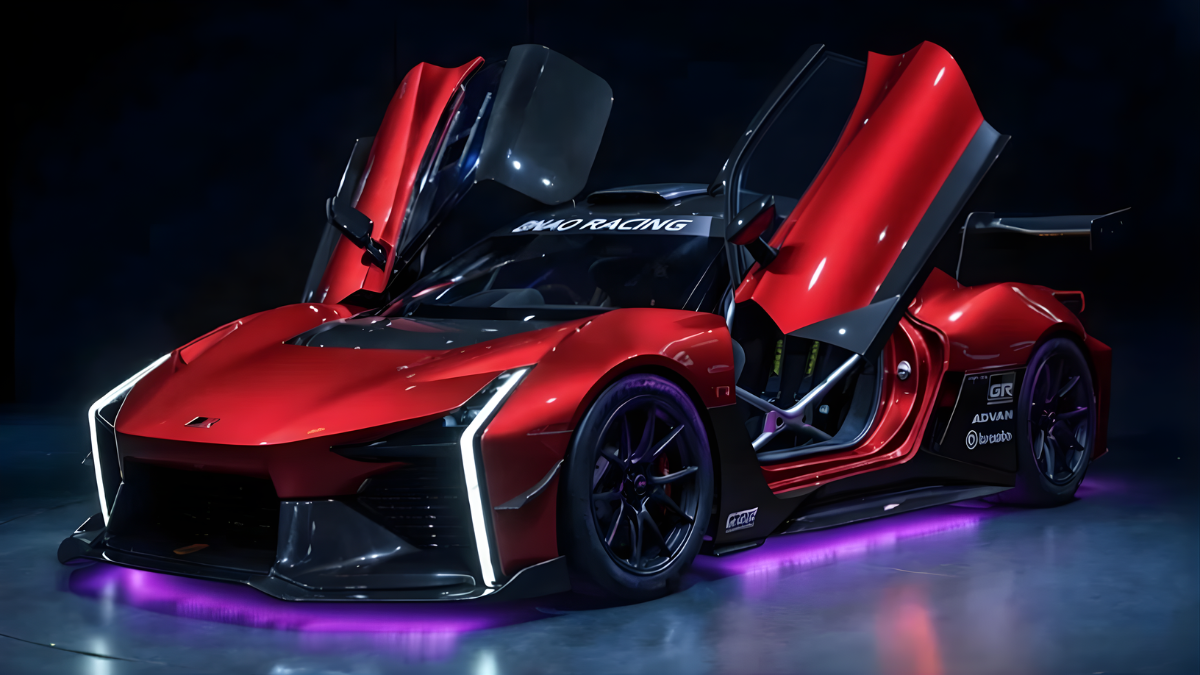
The 2026 Toyota MR2 is shaping up to be one of the most exciting sports-car revivals of the decade. Long celebrated as a lightweight, mid-engine driver’s car that delivered exotic handling at an attainable price, the MR2 left a lasting mark on automotive history before its discontinuation. Now, nearly two decades later, its return promises something entirely new yet deeply familiar: modern performance driven by electrification, cutting-edge technology, and the same sharp driving focus that made the MR2 legendary.
Backed by the performance vision of Toyota, the MR2 revival reflects a growing commitment to enthusiast cars even as the industry pivots toward electric mobility. This is not a nostalgic reissue. It is a reimagination of what a compact sports car can be in the modern era.
A Legendary Sports Car With a Unique Place in History
The original MR2 stood apart in a world dominated by front-engine sports cars. Its mid-engine, rear-drive layout delivered remarkable balance, quick responses, and a level of engagement rarely found at its price point. For years, the MR2 was praised for its purity, simplicity, and ability to make everyday drivers feel like skilled racers.
The 2026 revival aims to preserve that core identity. Toyota understands that the MR2 name carries expectations of precision, agility, and emotional driving. Any modern interpretation must deliver more than speed alone. It must recreate the feeling of connection that defined the original.
Electrification as a New Performance Tool
What makes the 2026 Toyota MR2 especially intriguing is its rumored embrace of electric or electrified power. Rather than abandoning performance, electrification is expected to enhance it. Instant torque, precise power delivery, and advanced control systems can elevate the MR2’s responsiveness beyond what was possible with older combustion engines.

Early speculation suggests Toyota could adopt a fully electric setup or a hybrid configuration that places electric motors strategically to maintain the mid-engine balance. This approach would allow the MR2 to remain compact and agile while delivering acceleration that feels immediate and thrilling.
Instead of focusing on headline horsepower alone, the new MR2’s performance philosophy appears centered on lightness, balance, and driver feedback, using electric technology as an enabler rather than a replacement for driving enjoyment.
Mid-Engine Layout Still at the Core
Despite changes in propulsion, the MR2’s defining layout is expected to remain intact. A mid-engine or mid-mounted power system continues to be the ideal configuration for achieving neutral handling and rapid directional changes.
Toyota’s recent experimentation with mid-engine performance prototypes indicates that significant engineering effort is being invested in this layout. For the MR2, this means weight distribution optimized for cornering confidence, predictable behavior at the limit, and a driving experience that rewards skill rather than isolating the driver.
Performance Expectations for a New Era
While official figures remain unconfirmed, expectations for the 2026 MR2 are high. Electric assistance or full EV power could deliver explosive acceleration, potentially surpassing the straight-line performance of previous generations. However, Toyota’s performance division has repeatedly emphasized that numbers alone do not define a great sports car.
The MR2 revival is expected to focus on usable performance, where acceleration, braking, and handling work in harmony. Lightweight construction, advanced chassis tuning, and precise steering calibration are likely to play a bigger role than sheer output.
Here is the single bullet-point section highlighting the MR2’s expected core philosophy, written in sentence-style format as required:
• Mid-engine balance designed for sharp handling and driver confidence, • Electrified power delivery offering instant response and modern efficiency, • Lightweight construction focused on agility rather than excess power, • Driver-centric tuning that prioritizes feel and engagement.
Modern Design That Respects the Original
Design plays a crucial role in reviving an icon, and the 2026 MR2 is expected to strike a careful balance. The original car was compact, purposeful, and free of unnecessary ornamentation. The modern version is likely to reinterpret those traits through cleaner surfaces, aggressive aerodynamics, and contemporary lighting technology.
Expect a low, wide stance with proportions that immediately communicate performance. Aerodynamic elements will likely serve both form and function, improving efficiency and stability while reinforcing the MR2’s sporty character.
Rather than chasing retro styling, Toyota appears focused on creating a design that feels timeless and forward-looking, ensuring the MR2 does not feel outdated as technology evolves.

Driver-Focused Interior With Smart Integration
Inside, the 2026 MR2 is expected to remain true to its roots as a driver’s car. The cockpit will likely emphasize a low seating position, excellent visibility, and controls oriented toward driving rather than distraction.
Digital displays will provide performance data and vehicle information clearly, while modern connectivity ensures everyday usability. The challenge for Toyota will be balancing advanced technology with simplicity, keeping the cabin focused on driving rather than screens.
Materials and finishes are expected to reflect Toyota’s growing attention to quality, but without turning the MR2 into a luxury coupe. Performance remains the priority.
Why the MR2’s Return Matters Now
In an era dominated by SUVs and crossovers, the return of a compact, performance-focused sports car sends a strong message. The 2026 Toyota MR2 represents Toyota’s belief that driving enjoyment still has value, even as electrification reshapes the industry.
This revival also demonstrates that electric performance does not have to mean heavy, oversized vehicles. The MR2 shows how electrification can support lightweight, engaging cars that emphasize skill and connection.

Enthusiast Excitement and Market Impact
The mere hint of an MR2 comeback has generated widespread excitement among enthusiasts. Trademark filings, concept speculation, and comments from Toyota’s leadership have fueled anticipation that this revival is more than wishful thinking.
For younger drivers, the MR2 could become an entry point into performance cars that blends modern technology with classic sports-car dynamics. For longtime fans, it represents a chance to reconnect with a nameplate that once defined affordable performance.
Balancing Heritage With Innovation
Reviving the MR2 is not without challenges. Toyota must respect its heritage without becoming trapped by it. By embracing electrification while preserving mid-engine balance and driver focus, the 2026 MR2 has the potential to achieve that balance.
If executed correctly, it could redefine expectations for modern sports cars and prove that electrified performance can still deliver genuine excitement.
Conclusion
The 2026 Toyota MR2 stands as a powerful symbol of how classic sports cars can evolve without losing their soul. By combining mid-engine balance, electrified performance, modern design, and a renewed focus on driving engagement, the MR2 revival promises to be far more than a nostalgic return. It could become a benchmark for how performance, innovation, and heritage coexist in the next generation of sports cars. For enthusiasts who value feel, precision, and excitement, the MR2’s comeback may be one of the most meaningful automotive moments of the decade.

Disclaimer: This article is based on early reports, trademark activity, and industry speculation. Final specifications, powertrain details, and production plans will be confirmed by Toyota through official announcements.